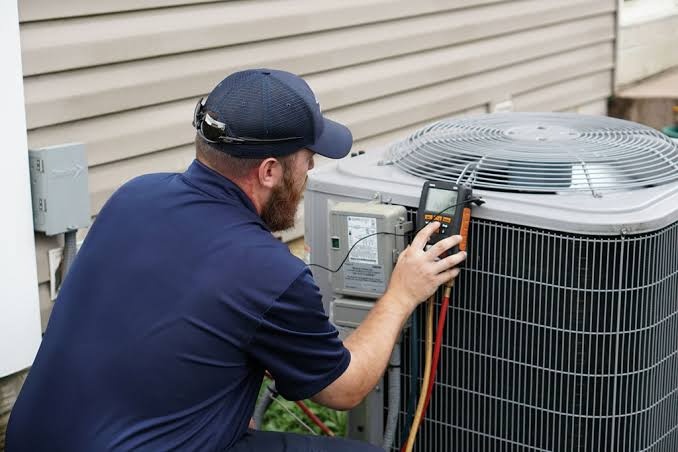
Home heating and cooling technology is evolving rapidly as homeowners seek greater energy efficiency, year-round comfort, and more intelligent ways to manage indoor temperatures. In 2026, heat pump technology is receiving increased attention because modern systems can provide both heating and cooling while incorporating variable-speed operation, smart controls, advanced sensors, and improved efficiency.
For homeowners considering heat pump installation services, understanding the latest technology and installation trends can make the decision-making process easier. A heat pump is not simply another HVAC appliance; its performance depends on equipment selection, system sizing, building characteristics, installation quality, and ongoing maintenance.
A heat pump transfers heat rather than relying exclusively on traditional combustion or electric resistance methods. During the cooling season, it moves heat from indoors to the outside. During the heating season, it reverses the process and transfers available heat indoors.
This makes heat pumps versatile systems capable of providing year-round climate control.
Modern heat pumps are also becoming increasingly efficient. Improvements in compressor technology, controls, refrigerants, and system design are helping manufacturers develop equipment capable of delivering dependable performance across a wider range of outdoor conditions.
Variable-speed compressor technology is one of the most important developments in modern heat pumps.
Instead of operating only at a fixed capacity, variable-speed systems can adjust output according to the home's current heating or cooling demand.
During mild conditions, the system can operate at a lower capacity for longer periods. When outdoor temperatures become more extreme, it can increase output as needed.
This approach can provide more consistent indoor temperatures, reduce frequent cycling, and support better humidity management during cooling.
However, homeowners should remember that equipment efficiency depends heavily on correct sizing and professional installation.
Connected thermostats and smart HVAC controls are transforming the way homeowners manage heat pumps.
Modern controls can provide programmable schedules, remote access, energy monitoring, occupancy-based adjustments, and notifications.
Some systems can analyze household routines and automatically modify operation according to occupancy and environmental conditions.
Smartphone connectivity also allows homeowners to monitor and adjust their HVAC system remotely.
These features can make temperature management more convenient while helping households reduce unnecessary heating and cooling when spaces are unoccupied.
One of the most notable trends in heat-pump technology is improved performance in colder weather.
Manufacturers continue developing systems designed to maintain useful heating capacity at lower outdoor temperatures.
This advancement is particularly important for homeowners who want a heat pump to serve as a primary heating system rather than simply supplemental equipment.
Actual performance depends on the specific equipment, outdoor conditions, building envelope, and installation. Homeowners should therefore evaluate equipment specifications and local climate requirements before selecting a system.
Correct sizing remains one of the most important factors in successful HVAC installation.
An oversized heat pump may cycle more frequently than necessary, while an undersized system may struggle to maintain comfortable indoor temperatures during periods of extreme weather.
Professional load calculations can consider factors such as square footage, insulation, windows, building orientation, occupancy, and local climate.
Choosing equipment based only on the capacity of an existing air conditioner or furnace may not provide the best result.
Proper sizing allows the equipment to operate closer to its intended performance range.
A highly efficient heat pump cannot overcome every weakness in a building.
Poor insulation, air leakage, inefficient windows, and restricted ductwork can increase heating and cooling demand.
Before installation, homeowners may benefit from evaluating the overall condition of the building envelope.
Improving insulation or sealing significant air leaks can reduce the workload placed on HVAC equipment.
This whole-home approach can make a new heat pump more effective and may improve comfort throughout the property.
Refrigerant technology is undergoing significant changes as the HVAC industry responds to environmental considerations and evolving regulatory requirements.
Newer heat pumps are being designed around updated refrigerant technologies and increasingly sophisticated safety and control systems.
Homeowners replacing older equipment should discuss refrigerant compatibility and future service considerations with a qualified HVAC professional.
Because refrigerant handling requires specialized equipment and training, homeowners should never attempt to install, recover, or charge refrigerants themselves.
Connected heat pumps are increasingly capable of monitoring operating conditions.
Sensors can collect information about temperature, runtime, system behavior, and other performance indicators.
Advanced monitoring can help identify unusual patterns before they become major failures.
For example, an unexpected change in operating time could indicate restricted airflow, changing outdoor conditions, or an equipment issue.
Predictive diagnostics do not replace professional inspections, but they can provide valuable information for maintenance and troubleshooting.
Heat pumps can also be integrated with zoning systems to provide different temperature settings for different areas of a home.
Instead of conditioning the entire property identically, zoning allows homeowners to prioritize frequently occupied rooms.
This can be particularly useful in homes with multiple floors, additions, finished basements, or rooms with different heating and cooling requirements.
When properly designed, zoning can improve comfort while helping homeowners manage energy consumption more effectively.
Modern heat-pump equipment contains sophisticated mechanical, electrical, and electronic components. Proper installation is therefore essential.
Incorrect sizing, inadequate airflow, improper electrical connections, or configuration problems can reduce performance even when high-quality equipment is selected.
Professional installers can evaluate the property, determine appropriate equipment capacity, configure controls, and verify system operation.
A quality installation provides the foundation for long-term reliability and efficiency.
Routine maintenance remains important after installation.
Homeowners should follow manufacturer recommendations for filter care and keep outdoor equipment clear of leaves, vegetation, and other debris.
Professional maintenance can include inspections of electrical connections, coils, airflow, controls, condensate systems, and other components.
Regular service can help identify developing problems and keep the system operating efficiently.
When evaluating heat pump installation services, homeowners should consider equipment efficiency, variable-speed operation, cold-weather performance, smart controls, refrigerant technology, zoning compatibility, installation quality, and long-term maintenance requirements.
The lowest initial price is not necessarily the best value. Equipment efficiency, expected operating costs, durability, comfort, and professional support should all be considered.
A qualified HVAC professional can evaluate the property and recommend equipment appropriate for its specific requirements.
Heat pumps are becoming smarter, more efficient, and more adaptable. Variable-speed compressors, intelligent controls, improved cold-climate performance, advanced refrigerants, predictive diagnostics, and zoning technology are shaping the next generation of residential HVAC.
Throughout 2026 and beyond, homeowners will increasingly view heating and cooling systems as connected components of an energy-efficient home rather than isolated appliances.
The best results come from combining suitable equipment with accurate sizing, professional installation, smart controls, proper airflow, and regular maintenance. With these elements working together, modern heat-pump technology can provide dependable year-round comfort while supporting more efficient home energy management.

This post has been authored and published by one of our premium contributors, who are experts in their fields. They bring high-quality, well-researched content that adds significant value to our platform.










London Lifestyle is your guide to fashion, travel, food, and modern city living in London. Stay inspired with daily lifestyle updates and trends.
